

Adolph Reed: We’re Not Going to Get Out of This Overnight
An interview with Adolph Reed, Jr. on the 1996 Labor Party, left organizing today, and why 1965 was a watershed moment in American politics


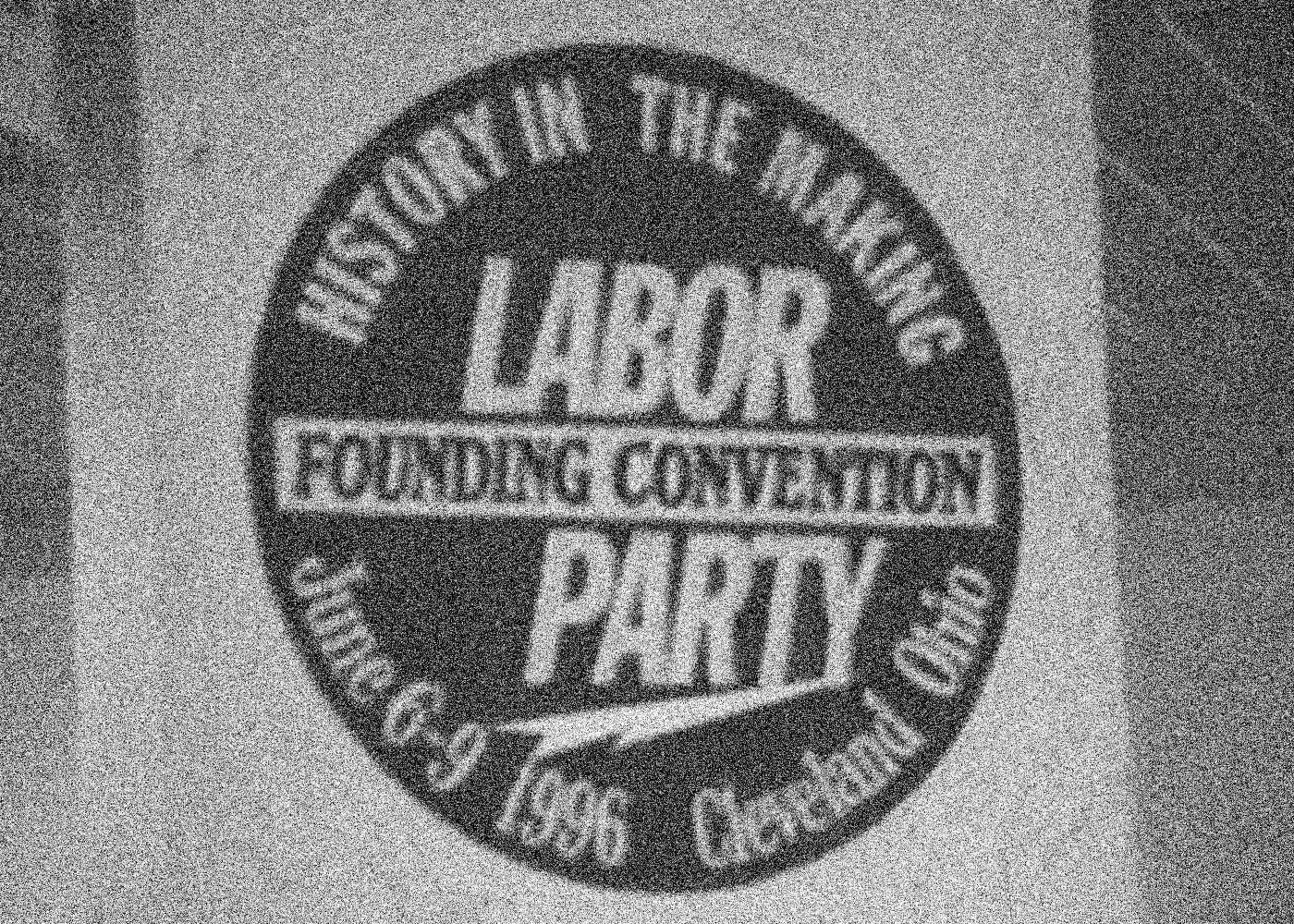
This year marks the thirtieth anniversary of the founding of the 1996 Labor Party, an ambitious experiment in building a working-class political institution grounded in organized labor and independent of either the Democrats or the Republicans. “The bosses have two parties. We need one of our own,” founder and labor leader Tony Mazzocchi often said. At its height, the Labor Party counted six national unions and more than 500 regional and local unions among its affiliates, representing “probably close to 20 percent of the institutional labor movement,” in the words of former Labor Party national organizer Mark Dudzic.
One of the earliest core members of this effort was Adolph Reed, Jr., who was invited to a talk Mazzocchi was giving on the Labor Party at the United Electrical, Radio and Machine Workers of America (UE) union hall in Chicago by UE official Carl Rosen. “I went,” said Reed, “and that was the next fifteen years of my life.” Though the Labor Party wound down its official operations in 2007, the platform that members adopted in 1996—which included universal health care, free public college, and expanded collective bargaining rights for workers—would resurface most notably in the Bernie Sanders campaigns of 2016 and 2020.
In 2026, the toll that decades of bipartisan neoliberal governance has taken on workers is starker than ever. Economic inequality has soared, union density continues to decline, and public trust in the government has cratered. As a result, more voters now identify as independents than as Democrats and Republicans combined. Damage spoke with Reed about the lessons from the Labor Party and the state of left-wing politics in the US today.
Jennifer C. Pan: You recently were on an episode of the Class Matters podcast with fellow Labor Party members Katherine Isaac, Mark Dudzic, and Bob Wages discussing the Labor Party and the conditions that led to its founding in 1996. Given the worsening disillusionment among Americans with the two major parties—and the subsequent calls for third parties that circulate every year—what can we take away from this effort three decades later?
Adolph Reed, Jr.: Katherine and Mark wrote a great piece in 2012 called “Labor Party Time? Not Yet” that’s worth revisiting, and the three of us are working on another article about the Labor Party for a nonsite symposium that’ll be out later this year.
We all still think that the Labor Party’s approach to politics was the proper one to take. Tony [Mazzocchi] would often say, “We’re in a class war, and you don’t go to war without building an army.” So we’ve got to build the army first. In recent years I’ve been saying until I’m blue in the face that I think the electoral realm is the domain for consolidating victories that have been won on the plane of social movement organizing. Some people think it’s like a Field of Dreams thing—that if you declare a new party or put some candidates out there, people will come. But that’s not the way it works, and it doesn’t work that way because of ruling class hegemony. When the ruling class sets the terms of political debate, anything that’s not within the ruling class’s terms of political debate sounds crazy.
Another thing to keep in mind is that the Labor Party was born in a moment of insurgency within the labor movement, after the concessionary bargaining blitz of the 80s, and on the cusp of the travesty of NAFTA in the early 90s. And so our effort grew rapidly out of this moment of insurgency within the institutional labor movement, but then when that moment faded at the end of the century, we faded, too. All of our funding came from unions—I confirmed that we had 350 to 400 local affiliates that paid an annual affiliation fee, and we only ever lost one by active disaffiliation. We lost a lot more of them through mergers and going out of business.
So if you start out from the conviction that, politically, we’re now at the equivalent of the beginning of union organizing drive, then you know that it’s going to take a long time—and lot of labor-intensive and slow-cooked efforts—to build a movement that’s capable of altering the terms of the political debate. So much of progressive politics now is like an ad campaign—like if you just get the message out there, then people will buy your fucking toothpaste or whatever. But we didn’t get in this position overnight, and we’re not going to get out of it overnight.
Of course, it’s necessary to move to counter the authoritarian fascist Trumpist juggernaut, to challenge its control of government. And the only way that’s going to happen for the foreseeable future is through electing Democrats. That’s necessary, but the ultimate reason it’s necessary is to create space and time for the deeper organizing that’s required to alter the terms of political debate. We’re in this situation partly as a result of a half-century of bipartisan revanchist neoliberal capitalism, often enough led and shaped by Democrats, even Democrats representing themselves as “progressives,” Democrats who, since Clinton, have operated under the mantra, as my son put it at the time, “Me too, but not so much.” Elections will become a domain for effecting significant changes in policy orientation once they become platforms for dynamic, popularly based movements anchored in the working class that demand altering the terms of political debate in line with a principle guiding political engagement like our Debs-Jones-Douglass Institute motto of pursuing “what the country would look like if it were governed by and for the working class.” And the short-term objective of electing Democrats to stop the bleeding is not an alternative to the longer-term organizing we need. We need a Left that’s capable of what the Maoists used to call “walking on two legs.”
In the US, even with the ways that Trumpism seems to be faltering now, the Right can congeal and mobilize its base much faster than we can produce the counterweight. What that means, unfortunately, is that the work that there is to be done now is work that may not produce the kind of results that we want until this right insurgency has run its course. What you’ve got to do is connect with people who don’t already agree with you and try to find points of commonality and build on those. That’s what the Labor Party was all about. And at a time when so much of the Left basically rests on an imperative of “I have to do something,” I think there’s a fault line that divides the people who see themselves as part of a larger project of just trying to move the ball a few yards down the field and those who need to feel like they’re doing something and be recognized for it.
JP: Why were there so many lapsed Catholics in the Labor Party?
AR: [Laughs] Well, I’ll tell you how we found out about that. We had a national council meeting in Pittsburgh before our second convention in 1998, and the US Council of Catholic Bishops just happened to be meeting at the same hotel at the same time. So we ended up spending a lot of time in elevators with them and whatnot, and it eventually came out that among the dozen or so core people in the leadership of the Labor Party, all but one had been raised Catholic. Some were still practicing, and one had even been to the seminary for a while. It was weird.
There are some cultural aspects of having been raised Catholic that might predispose one to certain politics, like the belief that works are more important than faith, or liberation theology, or growing up on stories of the publicans and the Pharisees. But to give the question more of a serious answer, it likely had something to do with the generational representation of Catholics within the unionized working class—think of the relative strength of communist parties in Catholic countries in Europe and Latin America.
JP: There’s been a lot of excitement around Zohran Mamdani in New York. Do you see him as a continuation of the sort of universalist, social democratic project that Bernie Sanders undertook in 2016 and 2020 (which, as you’ve noted in the past, was itself nearly identical to the Labor Party’s platform)?
AR: I’ll say that I’ve always liked Mamdani. And I like his dad—I know him a little bit because we were both recruited by the New School around the same time, and, more than that, I’ve been reading him since I was in my mid-twenties, and I love his work. I like Mamdani’s mother’s work, too, for that matter. And it’s no question that Mamdani is good as a political figure. If I still lived in New York, I would’ve given him money, I certainly would have voted for him, and I probably would’ve worked on his campaign.
But one question I have for the people who are creaming in their pants over Mamdani is: Wasn’t Bill de Blasio a less exciting version of him just a few years ago? It wasn’t that long ago that de Blasio was mayor—I’m not asking people to recall Fiorello LaGuardia here. So why do you think Mamdani will succeed with an agenda that’s not radically different from de Blasio’s agenda? People point out that Mamdani had enough of a popular base to win, but so did de Blasio. And de Blasio was more of an insider politician, which would have given him some institutional advantages once in office.
A lot of the response seems to be the standard problem of hyper-enthusiasm, and, again, the thinking that you build a movement like you run an advertising campaign. And so the spirit in which I watched the Mamdani campaign was laced with a reasonably heavy dose of “Here we go again.”
And it’s the same when it comes to the chatter over Mamdani’s identification as a socialist. I may have told you the story before, but not long after the Labor Party’s founding convention, I was visiting friends in the Bay Area and accompanied one to the campus where she taught. On a lark, she asked me to make a presentation to her anthropology class on the Labor Party campaign for a constitutional right to a job and a living wage for all residents; concretely that meant $10/hour in 1996, indexed to inflation. And at the end of the talk, one student accused me of being disingenuous in not calling this program socialism and claimed that he might even support it if I admitted it was a socialist proposal. I said to him that “socialism” didn’t have any clear, recognized meaning to people at that point, so taking the label would only add confusion and spawn distracting debate, and that there were two simple premises of the campaign: 1) that everyone willing and able to work should have a right to a job and 2) that everyone who works for a living should earn enough to live on. To polish it off, I said he could call that socialism if he wanted, or social Keynesianism, or capitalism with a human face or even call it Teddy Pendergrass if he wished. I think about that encounter every time I hear some blather to the effect that it’s important that people are saying the word socialism.
It reminds me as well that at the apogee of the Occupy Wall Street moment, I had lunch on two consecutive Thursdays with different lefty colleagues in the Penn history department. Each lunch went exactly the same way: the colleague praised Occupy for at least encouraging people to talk about inequality as a problem. I asked who was talking about inequality that they knew who hadn’t been talking about inequality before Occupy. Each responded, “The New York Times.” And in each case I responded, “Okay, but six months ago the New York Times was talking about Kim Kardashian’s divorce from the basketball player.”
JP: You’re currently working on a book that traces the evolution of black politics after 1965. Can you elaborate on why 1965 was a significant turning point? People probably know that this was the year that the Voting Rights Act passed, and a year after the passage of the Civil Rights Act, but progressives are also quick to point out that racism and voter repression persisted after that. So how should we think about these pieces of legislation and what came after?
AR: It’s become more and more difficult to get across why 1965 was such a watershed year because people have become increasingly less inclined to think about politics as a practice that’s rooted in institutions and in institutional behavior rather than in feelings and expression. So the significance of the formation of a stratum of the black American population that participates in making laws and can exercise actual power to make decisions—and non-decisions—that have impact on people’s lives just gets lost from the collective understanding.
More than a decade ago, a historian named Peniel Joseph wrote a history of the Black Power movement called Waiting ‘Til the Midnight Hour. And I was surprised when I read the book, because it goes through what my son calls the costume party expressions of black nationalism, up through the Black Panthers in the early 70s, and then skips to hip hop as the continuation of the legacy of Black Power, which means that he pays no attention whatsoever to the emergence of a steadily growing stratum of black elected officials—mayors, city council members, state legislators, and Congresspeople—who shape both what we understand black politics to be—what Cedric Johnson has described as black ethnic interest group pluralism—and the environment within which political expectations and aspirations can be formed. Crucially, sidestepping those institutional developments also has meant that the race-reductionist politics, which rests on one version or another of the premise that “nothing has changed” for black people since 1965, 1865, or 1619, obscures the facts of sharply increased class stratification among black Americans, including the significant growth of a black investor class. And that is the foundation of the bizarre notion that the most pressing issue for racial justice is closing the “wealth gap” between the richest ten percent of black people and the richest ten percent of white people.
What we think of as black politics has become a narrow expression of an activity over who gets elected to what offices and when, and how we can facilitate that, and what the stakes of those elections are supposed to be. And on the other side of that coin is a performative or expressive activity that’s more like kayfabe, or reenactments of the direct-action phase of the Civil Rights Movement in the late 50s and early 60s that are disconnected from any specific objectives. One glittering example of the latter was the summer of George Floyd, which prompted people to talk about the largest civil rights demonstrations in the history of the world because there were protestors gathering on street corners all over the planet or whatever. Well, in reality, these protests were not unlike the color revolutions in the former Eastern Bloc countries—they were made-for-TV performances, and they weren’t directed toward any concrete objectives like full employment or, say, passing the Voting Rights Act.
This is one of the things that Bayard Rustin pointed out so trenchantly in his critique of Black Power in 1966. He argued that the only thing it was likely to produce was a new political establishment, which is exactly what it produced. And in the more than half-century since then, the focus of black political discourse has been more on trying to preserve a racial understanding of the needs and concerns of black people than it has been with trying to make black people’s lives better.
JP: Speaking of the summer of George Floyd, do you think progressives’ race politics have changed at all since 2020, especially in light of the reelection of Trump in 2024 and the Democrats suffering significant losses among Hispanic, Asian, and even black voters?
AR: The short answer is no.
Recently Letitia James made a snarky comment about how Mamdani and the three DSA types who recently got elected in NYC were naïve and didn’t understand how race and class work in the city. So it’s the same dynamic over and over again. I did recently say to Touré that the caterwauling coming from the antiracist Left over these types of attacks feels like a victory for Team Class Reductionist, because the mainstream Dems are making it clearer and clearer that their first go-to weapon against any left tilt is going to be identitarianism. As you well know, there’s still a political economy of identity out there.
Finally, one of the casualties of the half-century of unchallenged capitalist hegemony—and, as you know, I’ve defined neoliberalism as capitalism that has effectively neutralized working-class opposition—is undermining even leftists’ abilities to imagine how society can be qualitatively better than it is and the emergence of what we might call a “don’t let the perfect be the enemy of the good” Left, to which the critical response should be “don’t let what seems possible deflect what’s actually necessary.” Radicals forever have proclaimed that we’ve reached the moment of capitalism’s inescapably sharpened contradiction; people have proclaimed the slogan “socialism or barbarism” as the only possible options facing us for all my adult life, but the ruling class has found ways to finesse the contradictions with a measure of carrots, sticks, and bullshit, increasingly relying on sticks because of the requirements of accumulation and also because of its sense of entitlement.
However, that socialism or barbarism moment may be here finally. The dangers of climate change, for example, can be addressed only by states strong enough and committed to disciplining markets in ways that ruling classes will not accept. We’ve run out of—or should have run out of—room for hustles like carbon credits or investment incentives to work even as pretenses to address the crisis. How do we create a state capable of doing what’s necessary? I’ve compared this political moment to being at a T-intersection, at which moving in only one or two diametrically opposed directions is possible. As a Left, we know which direction is necessary. The very pragmatic question is, taking into account the vicious forces we’re up against, how do we organize to move effectively in that direction?
Adolph Reed, Jr. is Professor Emeritus of Political Science at the University of Pennsylvania and Distinguished Visiting Professor of Politics at Mount Holyoke College. He is author, most recently, with Kenneth W. Warren of Black Studies, Cultural Politics, and the Evasion of Inequality (Routledge, 2026) and is completing When Compromises Come Home to Roost: The Decline and Transformation of the Left in the United States. He has been engaged in working-class politics for more than half a century, was part of the effort to build an independent Labor Party in the US during the 1990s and early 2000s, and currently serves on the board of Food and Water Action and is a founding board member and functionary of the Debs-Jones-Douglass Institute, which pursues the question “What would our country look like if it were governed by and for the working class?”
another reed banger!! I laughed, I cried, I agreed! Thank u Jen Pan & damage editors! U did it again!